How Does a Three Layer Co-Extrusion Blown Film Machine Transform Modern Packaging Production?
The Three Layer Co-Extrusion Blown Film Machine has become a cornerstone of modern flexible packaging manufacturing. It enables producers to create multilayer films with superior strength, barrier properties, and cost efficiency in a single production process. This article explains how the technology works, what problems it solves, its technical structure, advantages, applications, troubleshooting insights, and how businesses can maximize ROI by choosing the right configuration.
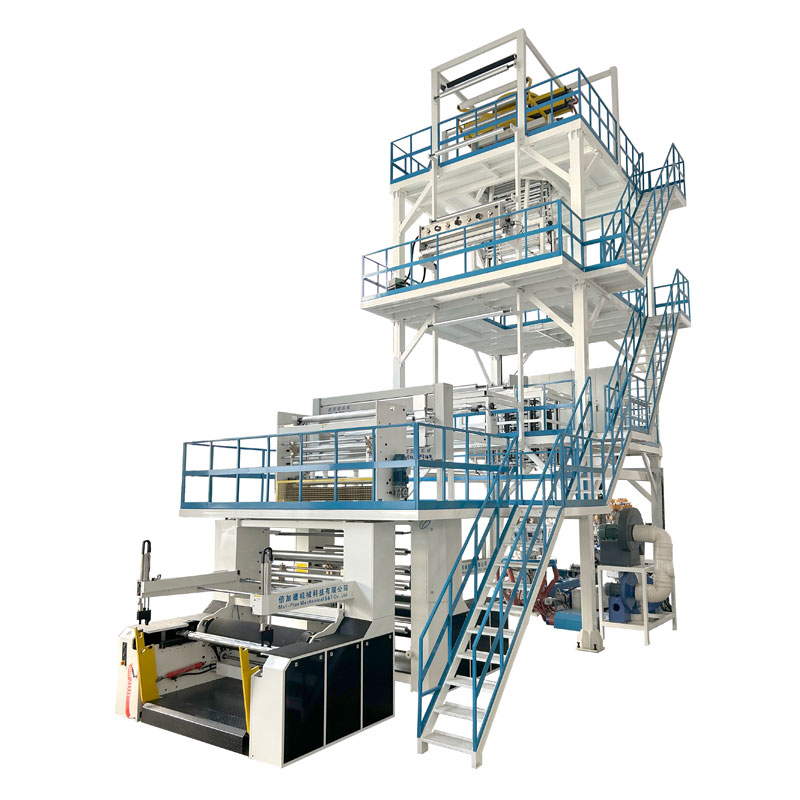
Table of Contents
- 1. Overview of Three Layer Co-Extrusion Technology
- 2. Working Principle Explained
- 3. Machine Structure and Key Components
- 4. Core Advantages for Manufacturers
- 5. Industry Applications
- 6. Comparison with Single-Layer Film Machines
- 7. How to Choose the Right Machine Configuration
- 8. Common Problems and Solutions
- 9. Future Trends in Co-Extrusion Technology
- 10. Frequently Asked Questions
- 11. Conclusion and Contact Information
1. Overview of Three Layer Co-Extrusion Technology
The Three Layer Co-Extrusion Blown Film Machine is designed to produce multilayer plastic films by simultaneously extruding three different polymer materials through a single die head. Each layer serves a specific function—such as strength, sealing performance, or barrier protection—resulting in a composite film that performs far better than single-layer alternatives.
In modern packaging industries, demands for durability, sustainability, and cost control have increased significantly. This technology addresses these challenges by combining materials like LDPE, LLDPE, HDPE, EVA, and barrier resins into one efficient production process.
2. Working Principle Explained
The working principle of a Three Layer Co-Extrusion Blown Film Machine is based on synchronized melting, extrusion, and inflation of multiple polymer streams.
- Three separate extruders melt different raw materials simultaneously.
- The molten plastics are fed into a co-extrusion die head.
- Materials are layered into A/B/C structure before exiting the die.
- Air is injected to inflate the tube into a bubble shape.
- The film is cooled, flattened, and wound into rolls.
This continuous process ensures uniform thickness, stable layer distribution, and excellent mechanical properties.
3. Machine Structure and Key Components
A typical three-layer co-extrusion system consists of several precision-engineered parts that ensure stability and output consistency.
| Component | Function |
|---|---|
| Extruders (3 units) | Independently melt and push different plastic resins |
| Co-Extrusion Die Head | Combines layers into a unified film structure |
| Air Ring System | Cools and stabilizes the film bubble |
| Haul-Off Unit | Controls film thickness and pulling speed |
| Winding System | Collects finished film rolls |
| Control Panel | Manages temperature, speed, and pressure |
Each component plays a critical role in maintaining film quality and production efficiency.
4. Core Advantages for Manufacturers
The adoption of three-layer co-extrusion technology brings multiple competitive advantages to packaging producers.
- Improved Strength: Layer combination enhances tensile and puncture resistance.
- Barrier Performance: Protects against moisture, oxygen, and contamination.
- Cost Efficiency: Allows use of cheaper core materials between premium outer layers.
- Flexible Design: Customizable layer structures for different applications.
- High Output: Continuous production reduces downtime and labor costs.
These advantages make it a preferred solution for high-performance packaging production.
5. Industry Applications
Three-layer films are widely used across multiple industries due to their versatility.
- Food packaging (fresh produce, frozen food bags)
- Medical packaging (sterile wraps, protective films)
- Agricultural films (greenhouse covers, mulch films)
- Industrial packaging (heavy-duty liners, stretch films)
- Retail packaging (shopping bags, garment covers)
Each application benefits from specific combinations of mechanical strength and barrier protection.
6. Comparison with Single-Layer Film Machines
| Feature | Single-Layer Machine | Three-Layer Co-Extrusion Machine |
|---|---|---|
| Film Structure | One material layer | Three functional layers |
| Strength | Limited | High and customizable |
| Cost Efficiency | Lower material flexibility | Optimized raw material usage |
| Barrier Properties | Basic protection | Enhanced multi-barrier system |
| Application Range | Limited | Wide industrial usage |
The comparison clearly shows why multilayer systems are replacing traditional film production methods.
7. How to Choose the Right Machine Configuration
Selecting the correct machine setup is essential for achieving production efficiency and product quality.
- Output Requirement: Determine daily production capacity needs.
- Film Width: Choose die size based on product dimensions.
- Material Type: Ensure compatibility with resins like LDPE, LLDPE, or barrier polymers.
- Automation Level: Decide between semi-automatic or fully automatic systems.
- Energy Efficiency: Consider machines with optimized heating and motor systems.
A well-matched configuration reduces operational cost and increases long-term stability.
8. Common Problems and Solutions
Even advanced systems may encounter operational challenges. Below are typical issues and solutions:
- Uneven Thickness: Adjust die gap and check air ring balance.
- Bubble Instability: Improve cooling airflow and reduce speed fluctuations.
- Poor Layer Adhesion: Verify resin compatibility and temperature control.
- Wrinkling: Check haul-off alignment and tension settings.
- Overheating: Inspect heating zones and cooling efficiency.
Proper maintenance and calibration significantly reduce downtime and waste.
9. Future Trends in Co-Extrusion Technology
The future of film production is evolving toward smarter, more sustainable systems.
- Integration of AI-based process monitoring
- Energy-saving extruder designs
- Biodegradable and recyclable material compatibility
- High-precision digital control systems
- Multi-functional hybrid film structures
These advancements will continue to enhance efficiency and environmental performance.
10. Frequently Asked Questions
Q1: What materials can be used in a three-layer co-extrusion machine?
A: Common materials include LDPE, LLDPE, HDPE, EVA, and various barrier resins.
Q2: Is maintenance complicated?
A: Routine maintenance is straightforward and mainly involves cleaning, lubrication, and calibration checks.
Q3: Can it produce biodegradable films?
A: Yes, with compatible bio-based resins and proper temperature control.
Q4: What is the lifespan of the machine?
A: With proper maintenance, it can operate efficiently for over 10–15 years.
Q5: How many operators are required?
A: Typically 1–3 operators depending on automation level.
11. Conclusion and Contact Information
The Three Layer Co-Extrusion Blown Film Machine represents a powerful solution for modern packaging demands. It offers a perfect balance between performance, cost efficiency, and production flexibility. By integrating multiple materials into a single film structure, manufacturers can achieve superior product quality while optimizing resource usage.
For businesses seeking to upgrade their production capabilities, choosing a reliable equipment partner is essential. Advanced engineering, stable performance, and professional support ensure long-term success in competitive markets.
Wuxi Mul-Plus Mechanical S&T Co., Ltd. specializes in high-performance film extrusion machinery designed to meet global industrial standards. Whether you are upgrading existing production lines or planning a new factory setup, professional technical support and customized solutions are available to match your requirements.
If you are interested in improving your production efficiency and film quality, please feel free to contact us for detailed specifications, configuration options, and professional consultation.